
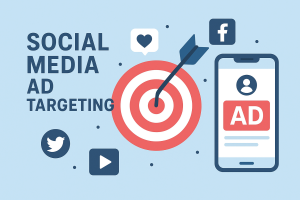
In the crowded world of social media, reaching the right people is key to successful advertising. Social media ad targeting allows businesses to deliver relevant ads to users based on demographics, interests, behaviors, and more. By targeting precisely, brands can maximize engagement, improve conversions, and get better ROI from their campaigns.
What Is Social Media Ad Targeting?
Social media ad targeting is the process of showing ads to specific groups of users who are most likely to engage with your brand. Platforms like Facebook, Instagram, TikTok, LinkedIn, and Twitter offer advanced targeting options, enabling businesses to:
- Focus on users by age, gender, location, or language
- Target based on interests, hobbies, or industry
- Reach users with specific online behaviors or engagement history
- Retarget users who previously visited a website or engaged with content
By narrowing down your audience, ad targeting ensures your marketing budget is spent efficiently and reaches those most likely to convert.
Benefits of Ad Targeting
- Higher Engagement: Ads shown to interested audiences are more likely to be liked, shared, or commented on.
- Better ROI: Targeting reduces wasted spend and increases conversion potential.
- Personalized Experience: Tailored ads resonate more with users, improving brand perception.
- Effective Retargeting: Reconnect with users who interacted with your brand but didn’t convert.
- Data-Driven Insights: Understand audience preferences and optimize campaigns based on performance metrics.
Types of Social Media Ad Targeting
- Demographic Targeting: Segment users by age, gender, location, language, or education.
- Interest Targeting: Show ads to users based on their hobbies, favorite topics, or pages they follow.
- Behavioral Targeting: Target users according to online behaviors, purchase history, or engagement patterns.
- Custom Audiences: Retarget existing customers or website visitors by uploading contact lists or using tracking pixels.
- Lookalike Audiences: Reach new users similar to your existing customers for higher potential engagement.
Strategies for Effective Ad Targeting
- Define Clear Goals: Whether it’s brand awareness, lead generation, or sales, your goals will shape targeting choices.
- Segment Your Audience: Divide audiences into smaller groups based on interests, behaviors, or demographics for more precise campaigns.
- Use Retargeting: Remind users who engaged with your content but didn’t convert.
- Test and Optimize: A/B test ad creatives, messaging, and targeting to identify what works best.
- Monitor Metrics: Track CTR, engagement, conversions, and ROI to improve campaigns continuously.
Common Mistakes to Avoid
- Targeting too broadly without refining your audience
- Ignoring data insights from past campaigns
- Using the same ad for multiple audience segments
- Neglecting retargeting opportunities
- Not updating targeting based on seasonal or trend changes
Conclusion: Why Social Media Ad Targeting Matters
Social media ad targeting enables businesses to reach the right audience, reduce wasted spend, and increase engagement and conversions. By leveraging demographic, interest, behavioral, and retargeting strategies, brands can make campaigns more effective, data-driven, and profitable. In today’s competitive digital landscape, precise targeting is essential for success.
