
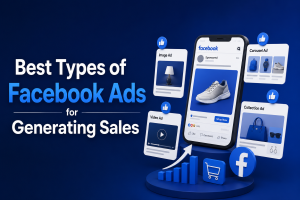
The Evolution of Sales Conversion Formats on Social Networks
In previous marketing eras, standard business accounts could publish basic promotional updates and achieve acceptable financial results. However, in the current digital landscape of 2026, the global e-commerce marketplace faces intense visual competition. Because thousands of competing brands deploy digital media assets simultaneously, uninspired advertisements are immediately ignored by the community.
Fortunately, choosing automated, user-focused ad layouts allows your company to capture consumer attention with minimal friction. This operational transition ensures that your target audience moves smoothly from initial product discovery to final checkout. Therefore, you must identify and master the specific high-performance formats that convert casual social media scrollers into paying customers.
Leveraging Automated Product Catalogs for Personalized Shopping
When a fast-growing retail brand manages an extensive inventory, presenting the right item to the right individual becomes a major technical challenge. If you attempt to build separate promotional variations for every single product manually, your marketing team will quickly become overwhelmed.
Conversely, integrating an automated catalog system allows the internal platform algorithms to handle the optimization work dynamically. This smart delivery framework automatically displays personalized product recommendations based on a user's explicit browsing history. Consequently, integrating these machine-learning formats into your standard setup allows your active Facebook ads for sales to convert high-intent shoppers seamlessly. Thus, deploying dynamic catalog structures protects your media budget by automatically serving relevant products to ready-to-buy consumers.
- Dynamic retargeting capabilities display the exact items that a web visitor recently added to their shopping cart.
- Automated price updating ensures that your target audience always views accurate promotional pricing structures without manual adjustments.
- Multi-product layouts allow users to browse through multiple matching collections directly inside their social feeds.
The Sales Dominance of Problem-Solution Video Formats
In addition to deploying automated catalogs, your creative production department must focus heavily on short-form video content. Previously, brands spent substantial budgets filming highly polished, expensive television-style commercials.
However, modern online consumers possess a strong psychological resistance to clinical, over-produced corporate messages. When a video looks like a paid pitch, viewers instantly swipe past the media asset to view organic posts instead. Therefore, you should focus on building low-fidelity, user-generated content that explains a real-life problem within the opening three seconds. Because this authentic editing style mimics the casual clips that individuals receive from friends, your promotions bypass traditional banner blindness completely. Fortunately, demonstrating your product's practical value through raw, unscripted Facebook ads dramatically accelerates your sales performance.
- Three-second visual hooks address a customer frustration immediately to stop rapid scrolling habits.
- Real-world product demonstrations eliminate buyer skepticism by showing the item functioning in real time.
- Clear customer video testimonials borrow immense trust from actual buyers to validate your commercial claims.
5 Crucial Steps to Optimize Commercial Layouts for Direct Sales
To build a highly resilient, high-converting digital advertising pipeline successfully, your team should execute a standardized creative playbook. Here is the exact checklist to implement to ensure your visual assets drive immediate purchase actions:
- Deploy Mobile-First Collection Frameworks: First, structure your primary promotional asset to feature a hero video positioned directly above a clean grid of four specific catalog items. This mobile-optimized layout transforms a standard social feed into an immersive, fast-loading digital storefront instantly.
- Utilize High-Contrast Comparison Graphics: Next, design side-by-side static images that clearly contrast your unique brand advantages against generic market alternatives. By doing this, you build an immediate logical trap that positions your item as the only reasonable choice.
- Implement Multi-Card Carousel Retargeting: Subsequently, arrange a sequential swipeable gallery to dismantle common consumer objections across separate visual frames. For example, use individual cards to highlight technical product specifications, five-star customer reviews, and clear money-back guarantees.
- Inject Low-Fidelity Founder Stories: Furthermore, publish unedited, vertical smartphone videos where your company founder explains the authentic origin story of the product. This transparent communication technique builds deep human connections, which helps convert skeptical audiences into loyal brand advocates.
- Configure Localized Language Scripts Perfectly: Finally, ensure your ad captions utilize clear language structures that match the specific communication habits of your regional consumer demographics. Afterward, your brand can execute high-converting Facebook ads for sales across diverse geographic territories without experiencing cultural disconnects.
Securing Long-Term Revenue Through Algorithmic Tracking
Beyond refining your visual hooks and carousel layouts, the underlying technical integration of your website dictates your long-term commercial success. Because privacy regulations continuously shift, relying solely on basic browser tracking methods will lead to inaccurate performance metrics.
Therefore, you must pair your standard web tracking tags with advanced server-side data tracking interfaces directly. When you transmit conversion data securely from your web server, the distribution algorithm gains a crystal-clear understanding of your ideal customer profile. Consequently, feeding accurate purchase data back into the system enables your active Facebook ads for sales to scale their delivery paths efficiently. This precise optimization loop ensures that your company lowers its overall cost per acquisition while maintaining a highly profitable return on ad spend.
Conclusion: Dominating Social E-Commerce with High-Performance Creatives
In summary, generating consistent sales volumes through social channels requires moving away from static, self-centered corporate messaging. Because modern online buyers demand immediate visual proof, authentic storytelling, and friction-free shopping experiences, generic digital campaigns will result in immediate financial losses. Fortunately, by leveraging automated catalog systems, mastering short-form problem-solution videos, and securing server-side data tracking tracking, you can insulate your store from ad fatigue. Implement these proven conversion strategies today to maximize your digital transaction volumes, surpass your retail competitors, and scale your brand revenue with absolute predictability.
Frequently Asked Questions (FAQ)
What is the primary benefit of using Collection Ads for mobile shoppers?
Collection ads create an immersive, fast-loading instant storefront that lets mobile users browse your product catalog without leaving the social media app.
How does user-generated content affect the conversion rates of Facebook ads?
Authentic user-generated content lowers acquisition costs significantly because it looks like organic social content and builds immediate trust with skeptical buyers.
Should an e-commerce brand use static images or videos to generate top-of-funnel sales?
A hybrid approach works best where short-form video drives initial product discovery, while static carousel images handle bottom-of-funnel retargeting to close the sale.
