
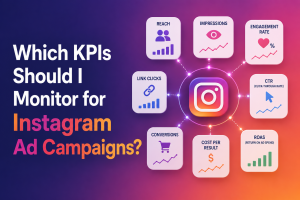
How can growing businesses track, analyze, and optimize the direct return on investment of their visual marketing budgets? Maximizing the profitability of your Instagram ads campaigns requires measuring more than just passive, surface-level audience reactions like basic post likes. Because real commercial growth depends on financial efficiency, you must analyze conversion rates, cost-per-acquisition metrics, and action-oriented click-through rates. Consequently, focusing your analytical energy on high-intent behaviors ensures that your strategic investment in Instagram ads consistently converts casual scrolling users into loyal paying clients.
The Crucial Role of Modern Ad Measurement
In previous marketing cycles, businesses could comfortably launch standard promotional assets and assume that their general revenue would automatically grow. However, in the current digital landscape of 2026, competitive auction environments demand precise financial accounting. Because thousands of regional and international brands launch massive promotional campaigns daily, relying on unoptimized media plans will quickly drain your capital.
Fortunately, tracking the correct metrics allows you to identify exactly where your marketing budget is generating a profit. This analytical clarity ensures that you make informed scaling decisions instead of relying on emotional guesswork. Therefore, you must learn to distinguish between shallow vanity metrics and high-value performance indicators.
Evaluating Brand Visibility and Audience Penetration
When you launch a new product collection, you must first understand how deeply your promotional media is penetrating your local market. If you only evaluate total view counts, you might mistakenly believe your business is achieving massive consumer connection.
Conversely, monitoring the unique reach-to-impression ratio of your active campaigns reveals whether you are showing your media to new buyers or merely repeating assets to the same audience. Consequently, structuring highly optimized Instagram ads campaigns helps you monitor unique views to ensure that your message expands organically across your targeted geographic zones. Thus, prioritizing unique exposure metrics ensures that your brand builds real awareness among previously untapped customer segments.
- Unique Reach: This metric counts the actual number of individual, unique user accounts that have viewed your specific promotional media.
- Impression Volume: This calculation reflects the total number of times your media has appeared on user screens, including duplicate views by the same individuals.
- Frequency Score: Dividing your total impressions by your unique reach helps you monitor how often a single user sees your promotion before taking action.
Measuring True Consumer Connection Through Active Engagement
In addition to measuring broad visibility, you must continuously evaluate how deeply your target market interacts with your visual creative assets. Previously, many business owners assumed that acquiring simple image likes was the ultimate indicator of ad quality.
However, basic likes represent the lowest-value interaction because they require almost zero cognitive effort from the scrolling consumer. Therefore, measuring the volume of saves and direct shares generated by your Instagram ads campaigns provides a far more accurate reflection of purchase intent. Fortunately, tracking these high-value interactions helps you identify which visual concepts possess genuine viral potential and long-term utility.
- Save Volume: This high-value metric reveals how many users bookmarked your visual asset to revisit your product or offer later.
- Share Count: This statistic measures how often your audience actively forwards your promotion directly to their friends via private messaging channels.
- Comment Quality: This metric tracks written feedback, allowing your team to address immediate consumer inquiries and build community trust.
5 Critical Steps to Implement a High-Performance Measurement System
To establish a robust, reliable data-tracking framework that systematically identifies profitable creative variations, your growth team must execute a disciplined analytical playbook. Here is the exact roadmap to follow when organizing your measurement dashboards:
- Define Clear Campaign Objectives First: First, align your primary reporting dashboard with your true business goals rather than tracking every available data point. This initial step ensures that a campaign built for immediate sales is evaluated purely on purchase volume rather than soft engagement.
- Isolate Your Outbound Click-Through Rate: Next, closely monitor the specific ratio of link clicks relative to total impressions to evaluate the persuasive power of your ad copy. By doing this, you instantly identify whether your visual hook and call-to-action are compelling enough to drive traffic off the platform.
- Track the Ultimate Conversion Success Metric: Subsequently, install robust pixel and server tracking codes to measure the exact percentage of landing page visitors who complete a purchase. This logical connection allows you to verify if your social messaging aligns perfectly with your website's landing page experience.
- Calculate Cost-Per-Acquisition Benchmarks Constantly: Furthermore, divide your total campaign expenditures by the number of completed sales to find your exact acquisition cost. This financial discipline prevents your business from running technically active campaigns that actually lose money on every unit sold.
- Audit Your Return on Ad Spend Weekly: Finally, divide your total generated revenue by your total creative ad spend to identify your overall financial performance. Afterward, you can confidently scale your highest-performing assets while pausing negative-yielding campaigns before they drain your corporate reserves.
Balancing Short-Term Conversions with Long-Term Brand Equity
Beyond focusing solely on immediate sales data, the strategic marketer understands that some campaigns exist to build long-term market presence. Because the modern consumer journey often involves multiple touchpoints before a transaction is finalized, tracking attribution patterns is incredibly important.
Therefore, you should not immediately pause campaigns that generate high reach but low direct purchase volumes if they feed your retargeting funnels. When you notice that your initial brand-building ads lower your overall customer acquisition costs over time, you recognize their quiet power. Fortunately, analyzing your performance metrics through a multi-touch model allows you to appreciate how every phase of your Instagram ads contributes to consistent commercial growth. This comprehensive analytical perspective ensures that your business maintains a healthy pipeline of new prospects while constantly closing active sales leads.
Conclusion: Turning Social Media Data into Business Intelligence
In summary, running highly profitable visual campaigns requires looking past vanity indicators to focus on metrics that directly impact your bottom line. Because modern algorithms favor relevant, high-quality content, your measurement system must guide your creative development process. Fortunately, by systematically tracking unique reach, active saves, outbound click-through rates, and acquisition costs, you can construct a highly predictable sales engine. Implement this disciplined, data-driven framework today to eliminate waste, maximize the return on your Instagram ads campaigns, and scale your enterprise securely.
Frequently Asked Questions (FAQ)
What is the difference between reach and impressions for social media campaigns?
Reach measures the number of unique users who saw your ad, while impressions track the total number of times your ad was displayed on screens.
Why is the click-through rate (CTR) considered a bridge metric in advertising?
The click-through rate acts as a bridge because it connects top-funnel visual attention with mid-funnel website traffic and intent.
How do user saves on Instagram reflect purchase intent better than likes?
A save indicates high purchase intent because the user deliberately archives the post to review, share, or purchase the item at a later time.
