
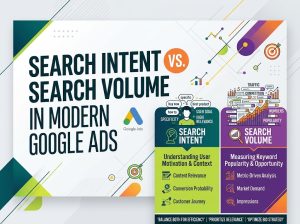
Modern Google Ads bidding strategies prioritize underlying user search intent over raw keyword search volume. Although high-volume search terms generate massive ad impressions, low-intent queries can quickly exhaust marketing budgets on unqualified clicks. Aligning ad creative, landing page experiences, and conversion tracking with high-intent searches helps campaigns maximize overall return on ad spend (ROAS).
Why High Search Volume Can Mislead Media Buyers
Targeting popular search terms often leads to wasted ad spend without driving real revenue. While high search volume promises broad reach, it frequently attracts top-of-funnel users who are not ready to purchase. Furthermore, generic keywords increase cost-per-click metrics due to intense market competition. Therefore, focusing purely on impression numbers weakens conversion rates across active Google Ads. By shifting focus toward underlying user motivation, campaign managers ensure every ad dollar targets ready-to-buy consumers.
Key Attributes of Intent vs Volume
Evaluating audience intent requires looking beyond raw query metrics inside keyword planners. Furthermore, performance marketers must analyze user behavior to predict actual conversion likelihood.
- High Volume, Low Intent: Broad search phrases like "free software" that bring high traffic but yield zero sales.
- Low Volume, High Intent: Specific transactional queries like "buy enterprise cloud software" that drive immediate purchases.
- Commercial Investigation: Comparison searches like "best CRM tools" that indicate strong buyer consideration.
- Brand-Specific Intent: Direct branded queries that capture users reaching the final checkout stage.
Comparing Intent Metrics and Volume Metrics
To optimize campaign performance, digital marketers must evaluate how intent signals compare to volume indicators. Because automated bidding algorithms rely on conversion data, high-intent keywords deliver better machine-learning signals.
| Campaign Factor | High Search Volume Strategy | High Search Intent Strategy |
|---|---|---|
| Primary Focus | Maximum impression reach | Qualified conversion actions |
| Cost Per Click | High due to broad competition | Variable based on niche specificity |
| Conversion Rate | Lower average response rate | Higher transaction completion rate |
| Budget Efficiency | High risk of wasted spend | Focused return on investment |
Step-by-Step Approach to Intent-Based Bidding
- Analyze Audience Search Queries: Review search term reports regularly to identify distinct conversion signals. Consequently, filtering out generic search terms keeps your keyword lists clean.
- Implement Negative Keyword Lists: Block broad, non-transactional search variations to prevent irrelevant ad triggers. Therefore, negative keywords preserve budget for high-converting queries.
- Align Ad Copy with User Need: Write custom ad headlines that address specific transactional pain points directly. Thus, tailored messaging increases click-through rates among qualified buyers.
- Optimize Landing Page Relevance: Connect high-intent ad groups to dedicated landing pages featuring clear calls to action. As a result, seamless landing page experiences boost overall Quality Scores.
- Adjust Smart Bidding Strategies: Configure value-based bidding models to prioritize high-value conversion events. Afterward, scale bids dynamically across profitable Google Ads.
Driving Sustainable ROAS Through Intent Targeting
In summary, balancing search intent against raw search volume is essential for modern search marketing success. Because high impression counts do not guarantee business revenue, prioritizing buyer motivation secures higher conversion rates. Consequently, aligning keyword targeting with user intent drives sustainable account profitability. Refine your campaign targeting today to maximize total return across Google Ads.
Frequently Asked Questions
Why is search intent more valuable than search volume for modern Google Ads?
Search intent is more valuable because it identifies users who are ready to purchase, whereas high search volume often includes unqualified browsers.
How do negative keywords improve search intent targeting?
Negative keywords improve targeting by filtering out non-commercial search terms so your budget only focuses on high-converting queries.
Does targeting low-volume, high-intent keywords lower overall ad spend?
Yes, targeting specific high-intent keywords reduces wasted clicks from casual searchers and lowers overall customer acquisition costs.
