
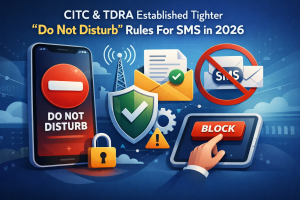
Across the MENA region, SMS marketing is entering a more regulated phase. In 2026, authorities such as CITC and TDRA have introduced stricter “Do Not Disturb” (DND) rules for bulk SMS to better protect consumers from unwanted messages. While these changes are primarily enforced in markets like Saudi Arabia and the UAE, their impact is quickly influencing how bulk SMS is handled across neighboring regions, including Lebanon.
Moreover, customer expectations are evolving alongside these regulations. People now demand more control over what they receive, when they receive it, and from whom. As a result, businesses that rely on bulk SMS must rethink not only compliance but also how they approach audience targeting and consent.
At the same time, stricter DND frameworks are not necessarily a limitation. On the contrary, they create an opportunity for brands to build cleaner, more engaged subscriber lists. Therefore, businesses that adapt early can improve both deliverability and campaign performance.
What the New DND Rules Mean for SMS Marketing
The updated “Do Not Disturb” rules focus on limiting unsolicited messaging and giving users clearer opt-out mechanisms. Instead of receiving messages by default, users now have more control over blocking promotional communications entirely or during specific hours.
Furthermore, these rules require businesses to respect customer preferences in real time. Consequently, sending messages outside allowed windows or to restricted users can lead to penalties, filtering, or complete delivery failure.
In other words, bulk SMS is shifting from a volume-driven channel to a permission-based system where relevance and timing matter more than ever.
Key Changes Businesses Should Understand
To stay compliant and competitive, businesses need to understand how these updated DND rules affect their campaigns. These changes are shaping how SMS marketing operates across the region.
- Users can fully opt out of promotional SMS through centralized DND systems
- Messaging is restricted during specific hours, especially late evenings and early mornings
- Consent must be clearly obtained before sending promotional messages
- Telecom operators actively filter non-compliant bulk SMS campaigns
- Businesses must maintain updated suppression lists for opted-out users
- Repeated violations can lead to sender blocking or account suspension
- Clear identification of the sender is required in every message
Because of these changes, businesses can no longer rely on broad, untargeted campaigns. Instead, precision and compliance are becoming the foundation of effective SMS marketing.
How DND Rules Are Changing Bulk SMS Strategy
Previously, many campaigns focused on reaching as many users as possible. However, with stricter DND enforcement, this approach is no longer sustainable. Therefore, businesses must shift toward more targeted and behavior-driven strategies.
Additionally, timing has become a critical factor. Sending messages at the wrong time not only reduces engagement but may also violate regulations. Consequently, marketers must align their campaigns with both customer behavior and regulatory limits.
- Segment audiences based on consent and engagement level
- Schedule messages within approved time windows
- Focus on relevance rather than frequency
- Use bulk SMS for high-value, targeted communication
- Combine SMS with other channels for better sequencing
- Monitor opt-out trends to refine targeting
- Continuously update contact lists to remain compliant
As a result, campaigns become more efficient, with higher engagement rates and lower risk of penalties.
The Opportunity Behind Stricter Regulations
Although stricter rules may seem restrictive at first, they actually improve the overall quality of SMS marketing. When only interested and consenting users receive messages, engagement naturally increases.
Moreover, customers are more likely to trust brands that respect their preferences. Consequently, this builds stronger relationships and improves long-term retention.
For businesses using bulk SMS, this means fewer wasted messages and more meaningful interactions. In many cases, smaller but more engaged audiences deliver better ROI than large, unfiltered lists.
Common Mistakes Businesses Must Avoid
Despite clear guidelines, some businesses still rely on outdated practices that can lead to compliance issues. Ignoring DND preferences or failing to update subscriber lists can quickly result in poor performance and regulatory risks.
Therefore, avoiding these common mistakes is essential for maintaining both compliance and effectiveness.
- Sending messages without verified user consent
- Ignoring DND restrictions and messaging blocked users
- Failing to update opt-out or suppression lists
- Over-sending messages within short timeframes
- Not aligning campaigns with approved messaging hours
- Using generic, non-personalized messaging
By addressing these issues, businesses can maintain strong campaign performance while staying within regulatory boundaries.
Frequently Asked Questions
What are DND rules in SMS marketing?
DND rules allow users to block or limit promotional messages, ensuring they only receive communications they have agreed to.
How do these rules affect bulk SMS campaigns?
They require businesses to obtain clear consent, respect timing restrictions, and avoid messaging users who have opted out.
Are these rules relevant outside Saudi Arabia and the UAE?
Yes. While enforced locally, they influence global SMS standards and are increasingly adopted by providers across regions, including Lebanon.
"Do Not Disturb" Rules For SMS in 2026
The tighter “Do Not Disturb” rules introduced by CITC and TDRA in 2026 mark a significant shift in how SMS marketing operates. Instead of prioritizing volume, the focus is now on consent, relevance, and timing.
Furthermore, businesses that adapt to these changes will not only remain compliant but also improve their campaign performance. By refining targeting, respecting user preferences, and optimizing timing, brands can create more effective and sustainable bulk SMS strategies.
Ultimately, the future of SMS marketing belongs to businesses that value quality over quantity. In a more regulated environment, smarter communication—not more communication—is what drives real results.
